
Multi-page labels – smart solutions for every requirement on your product
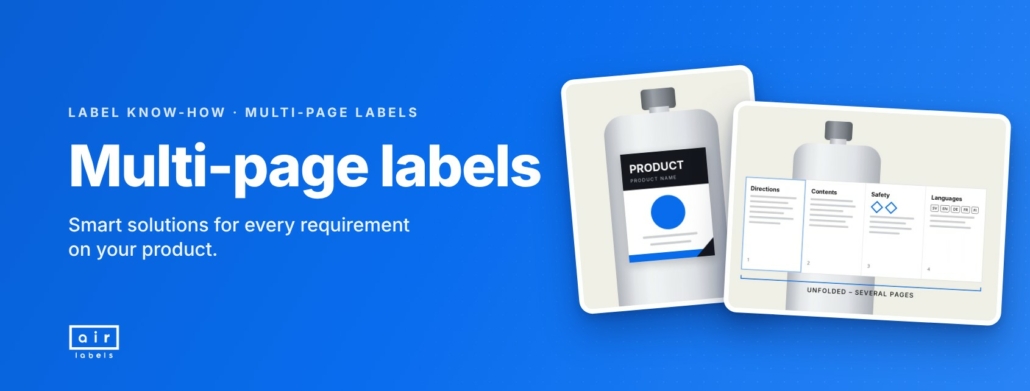
Ingredients, allergens, warnings, directions for use and several languages. The requirements for what must appear on a package grow every year, but the package does not get any bigger. With a multi-page label from Air Labels you can fit many times more text, and the design and look of your package stay exactly as before.
IN SHORT
- New EU rules for cosmetics, chemicals, detergents, packaging and environmental claims mean more text on the label.
- A multi-page label takes up the same space as an ordinary label, but has several printed pages.
- With a double (duo), triple, booklet, zig-zag or roller label you can fit 6 to 30 times more text, and the design of your package stays the same.
- A roller label without print on the back can be printed digitally, which allows short runs for product families with many variants.
1. The requirements for on-pack text are growing
It used to be mostly about making the INCI list fit. Now new requirements are arriving in several industries at the same time:
- Cosmetics, from 31 July 2026. The number of fragrance allergens that must be listed on the label increases from 26 to more than 80. The requirement applies to products placed on the market from that date, and from 31 July 2028 to all products on sale.
- Chemicals (CLP), from 1 July 2026. Fold-out labels are now an accepted solution for all products. Requirements for a minimum text size and clearer layout are on the way.
- Environmental claims, from 27 September 2026. Generic claims such as “eco-friendly” or “green” are banned unless they can be substantiated. If you make an environmental claim, it needs to be explained.
- Packaging (PPWR), by 2028. A common EU label will show what materials the packaging is made of, so that consumers can sort it correctly.
- Detergents and cleaning products, 2029. The new regulation allows some digital labelling. Dosage, allergens and safety information must still appear on the package itself.
- Food and drink, already now. Lowercase letters in the mandatory text must be at least 1.2 mm high. Wine must list ingredients and nutrition information.
- Several languages. If you sell across the Nordic countries, the same package may need Swedish, Norwegian, Danish and Finnish, and often English too.
All of this often has to fit on a label that is already full, and then it becomes hard to make room for both the design and legible text.
2. Five ways to fit more text
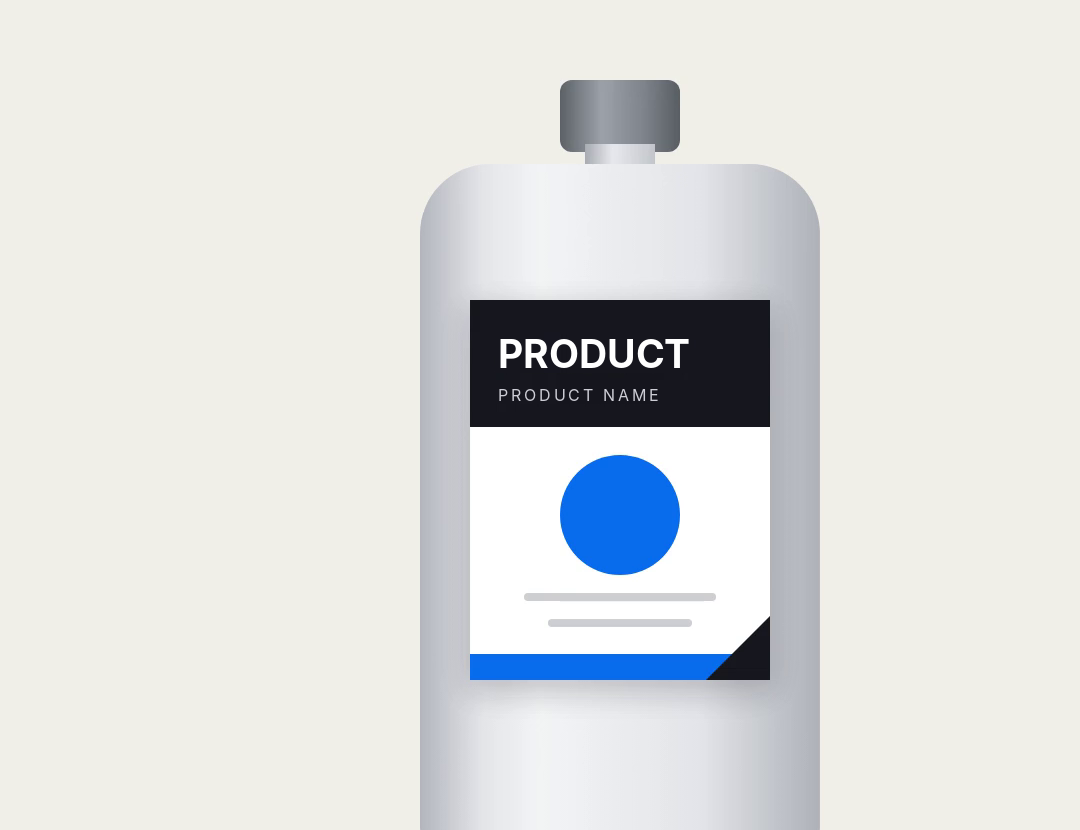
A multi-page label takes up the same space as an ordinary label and looks like an ordinary label until it is opened. Under the front there are more printed pages, which the consumer opens and then closes again. Double, triple and folder labels are in most cases applied just like ordinary labels. The roller label works in the many applicators that can rotate the package.
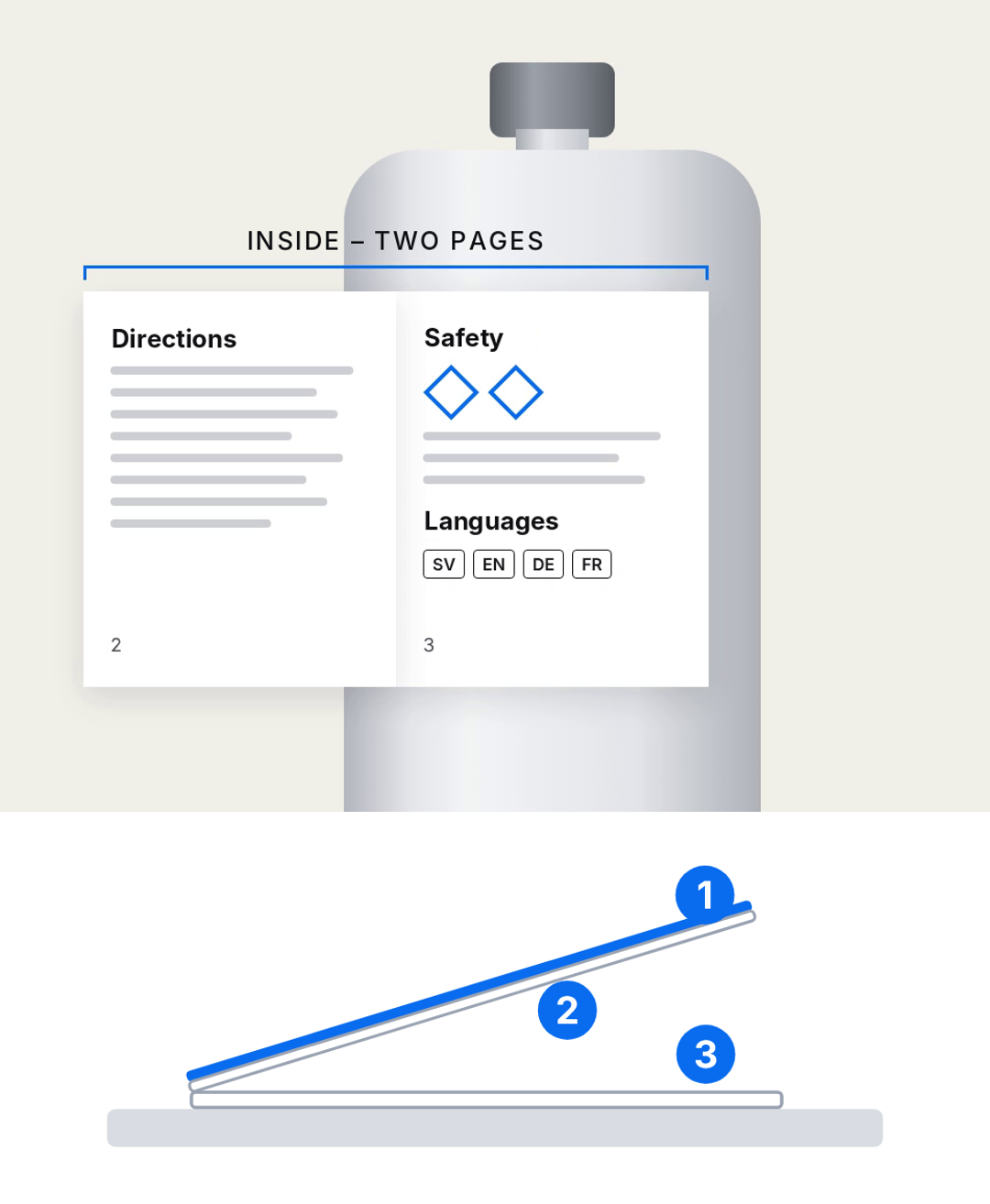
3 printed surfaces
Double label (duo label)
The double label is often called a duo label. A flap folds open like a page in a book, and underneath there are two more pages. A good fit when you need a little more space, for example for a full INCI list or a second language.
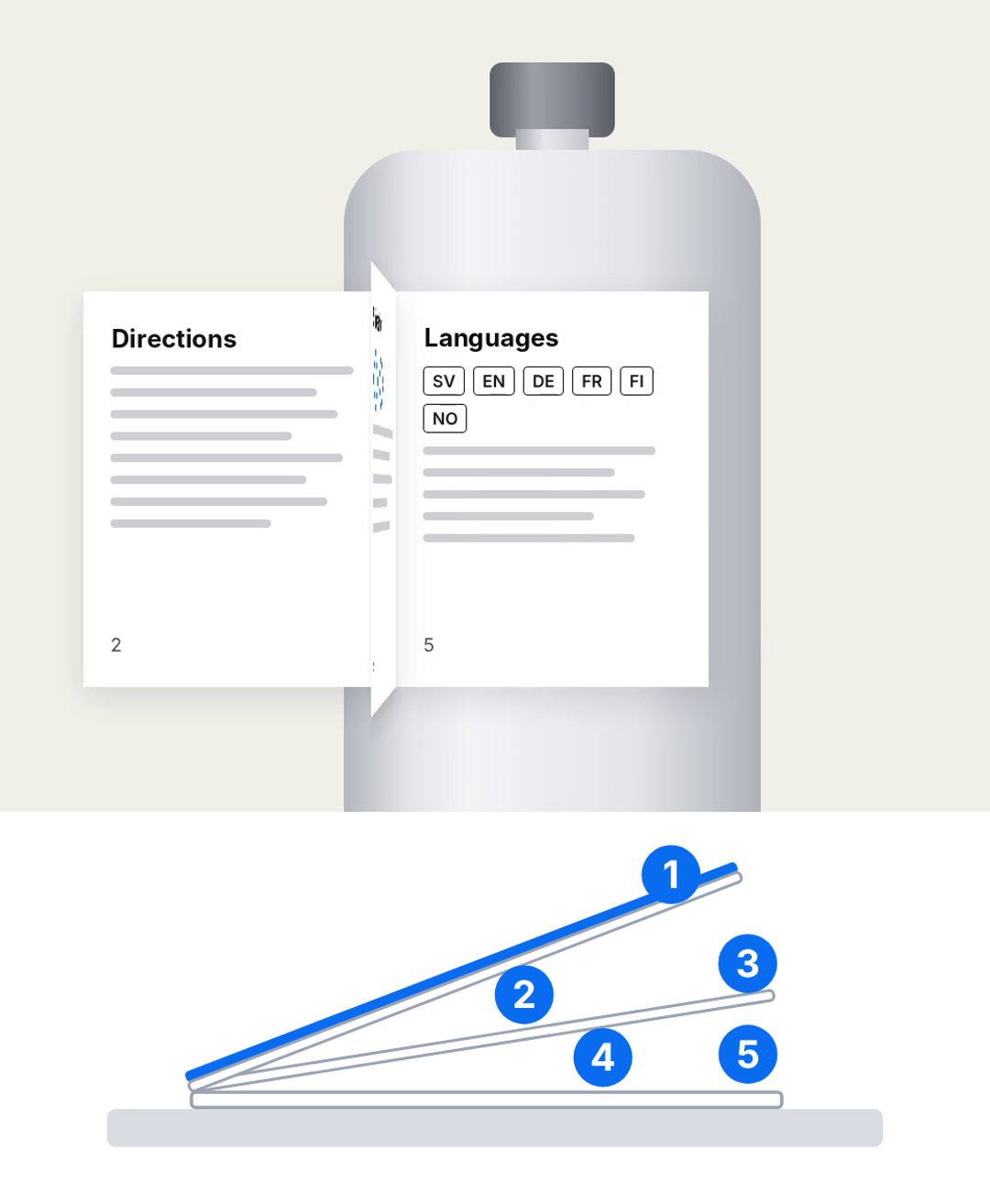
5 printed surfaces
Triple label
Two flaps on top of each other. Under the first flap there is a second one that also folds open. This makes it easy to have one surface per language, or to gather warnings and directions on a surface of their own.
many pages
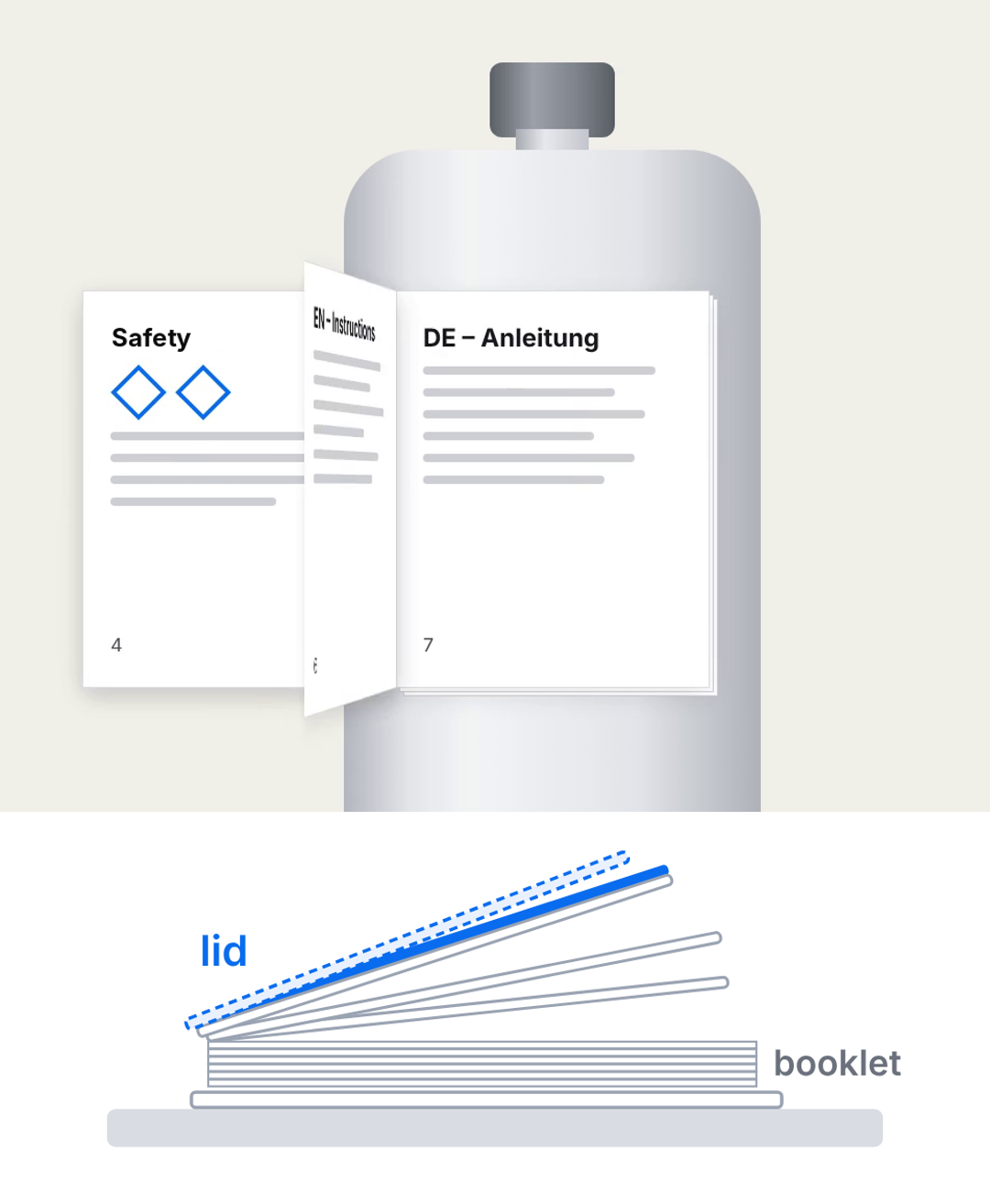
Booklet label
A small booklet under a transparent lid. The booklet is leafed through like a book and holds the most text of all, for example directions for use, safety information and many languages.
fold-out leaflet
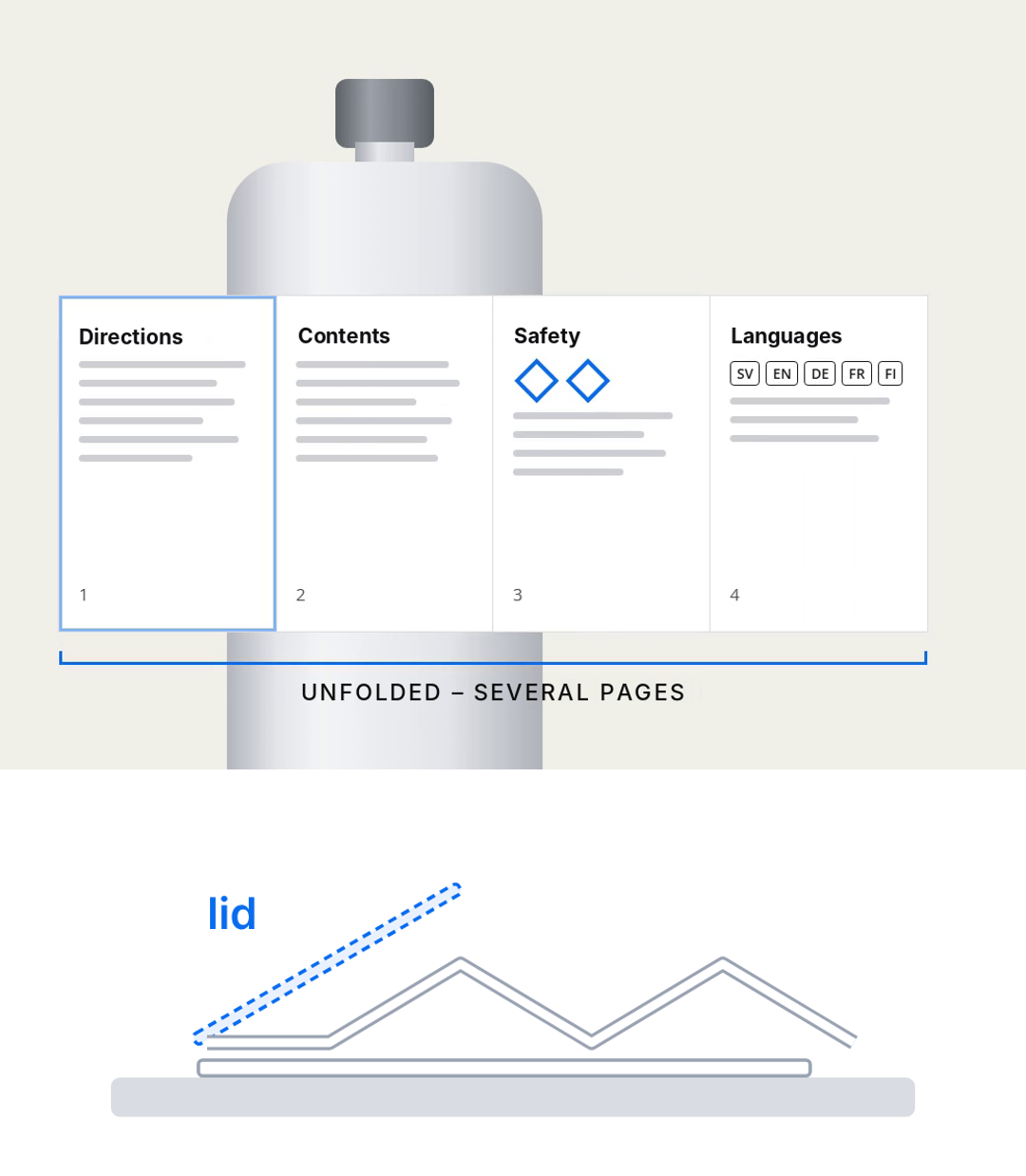
Zig-zag label
A leaflet under a lid that unfolds sideways, page by page, printed on both sides. A good fit when a lot of text should be readable at a glance, without leafing through pages.
unrolls around the package
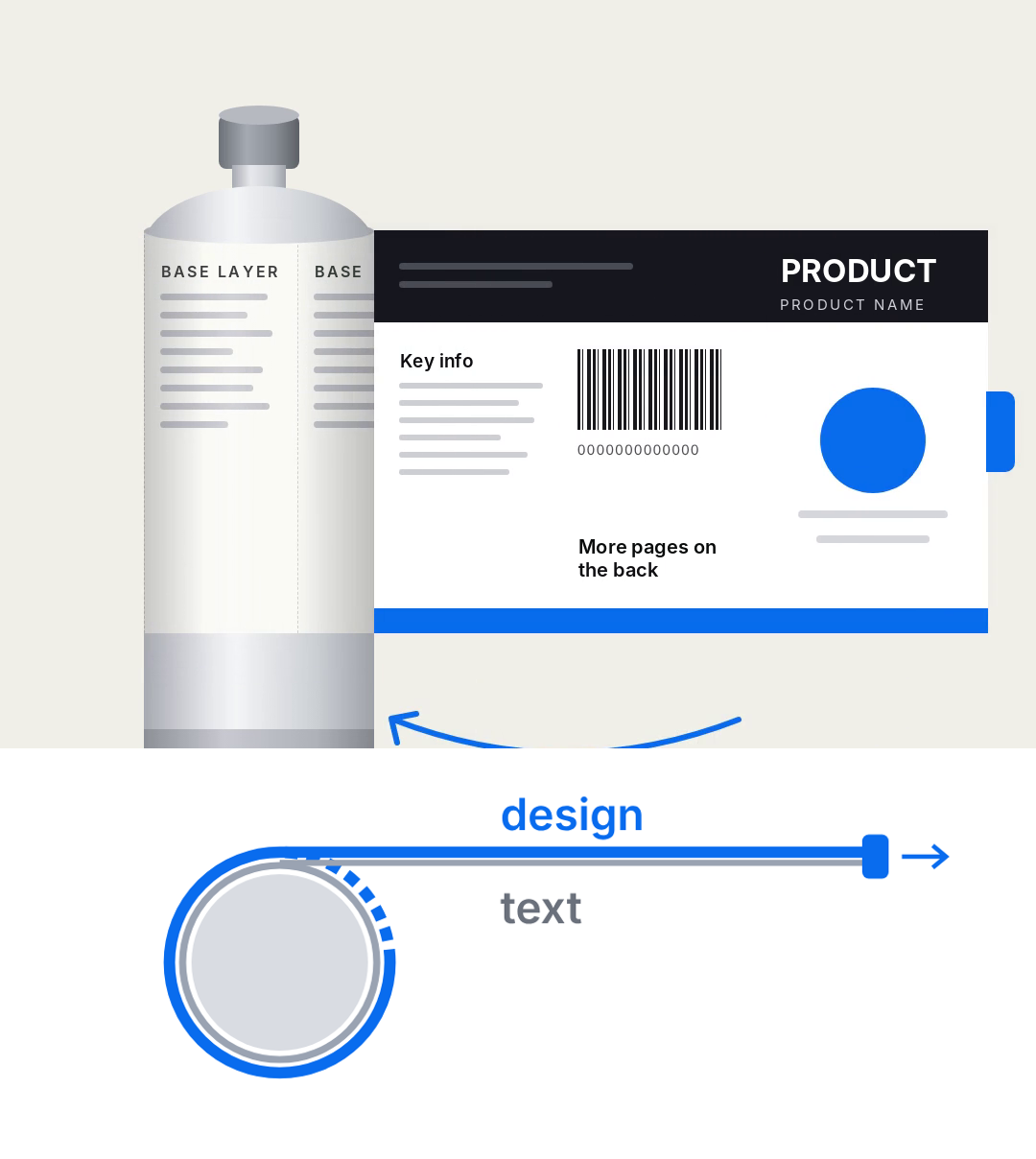
Roller label
You pull a tab and unroll the label, and the back holds several pages. Afterwards it rolls back again. The roller label can also be made without print on the back. It can then be printed digitally, which allows much shorter runs than other multi-page labels. This suits product families with many variants, for example different scents, flavours or strengths.
3. How much more text can you fit?
An example: a 100 × 50 mm label where the design takes up about 60% of the front, leaving 20 cm² for text. On a multi-page label, the extra surfaces are used entirely for text. With lowercase letters 1.2 mm high, which is the minimum for food labelling and roughly equals 6–7 point text, about 30 characters fit per cm².
Approximate number of characters, and how many times more text that is compared with an ordinary label.
The examples are approximate. Assumptions: the roller label is twice as long as the visible surface and has a printed base layer, and the pages of the booklet and zig-zag labels are about 90 × 45 mm. The actual number of characters depends on typeface, line spacing, margins and symbols.
4. Smaller text or a bigger package? You need neither
The text cannot be made smaller, because both regulations and legibility set a limit. The package can rarely be made bigger, because that requires new tooling and changes how the product looks. With a multi-page label we can still fit almost any text you could need, and the design stays the same.
Do you also need many variants in small quantities? A roller label without print on the back can be printed digitally, which makes even short runs cost-effective.
Our recommendation
- Review which requirements are coming in the next two years for your product category and markets.
- Work out how much text you need, and add room for more languages and new requirements.
- Send us your current label and we will suggest the right multi-page label and make a sample. Contact us.
Frequently asked questions
Can multi-page labels be applied with our existing labelling machine?
Double, triple and folder labels are supplied on rolls and are in most cases applied just like ordinary labels. The roller label works in the many applicators that can rotate the package. Tell us which machine you have and we will check.
Can we order short runs with many variants?
Yes, with a roller label without print on the back. It can be printed digitally, which makes short runs cost-effective, for example when a product family comes in many scents or flavours.
Does the label withstand being opened and closed many times?
Yes. The label is designed to be opened and closed again many times, so the information stays in place for as long as the product is in use.
Can’t we just put the information behind a QR code?
That works for some information, and a QR code can certainly be printed on the label. But several regulations require, for example, allergens, dosage and warnings to appear physically on the package.
Which type should we choose?
It depends on how much text you have, the shape of the package and how many languages you need. We will help you work it out and make a sample.
The regulatory overview reflects the situation in November 2026 and does not replace legal advice. Always check what applies to your specific product.

Leave a Reply
Want to join the discussion?Feel free to contribute!