
Winding direction – how the labels are positioned on the roll
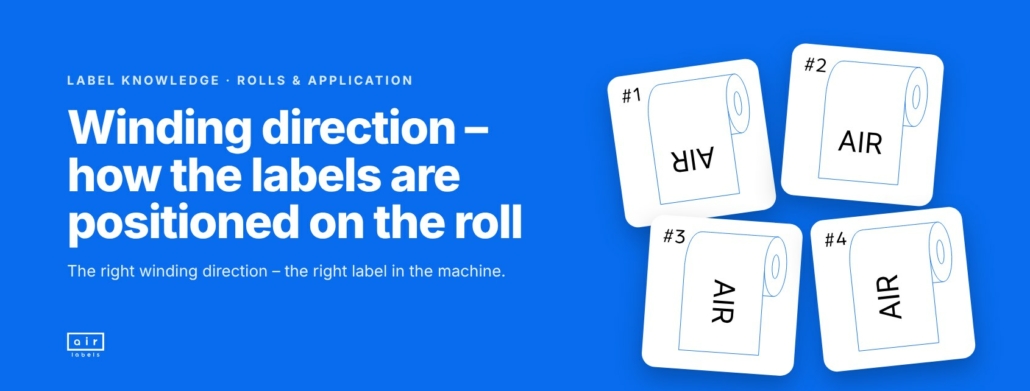
The winding direction tells you which edge of the label comes off the roll first, and whether the labels are positioned on the outside or the inside of the roll. With the wrong winding direction, the label ends up upside down or sideways, or the roll cannot be run in the label applicator at all. Here is how to specify the right winding direction and the right dimensions.
IN SHORT
- There are eight winding directions. We use the numbering 1–8 from the international label association FINAT.
- A single label or an artwork does not show how the label is positioned on the roll. The winding direction must be stated separately.
- Width and height relate to the roll: width across the web, height along the web.
- The right winding direction depends on your label applicator and your package.
1. Eight winding directions
There are surprisingly many different designations for winding directions, so make sure you know which one is being used. Air Labels uses the numbering 1–8 from the international label association FINAT. Numbers 1–4 are wound out, with the labels on the outside of the roll. Numbers 5–8 are wound in, with the labels on the inside, facing the core. Within each group, the number tells you which edge of the label comes off first when the roll is unwound.
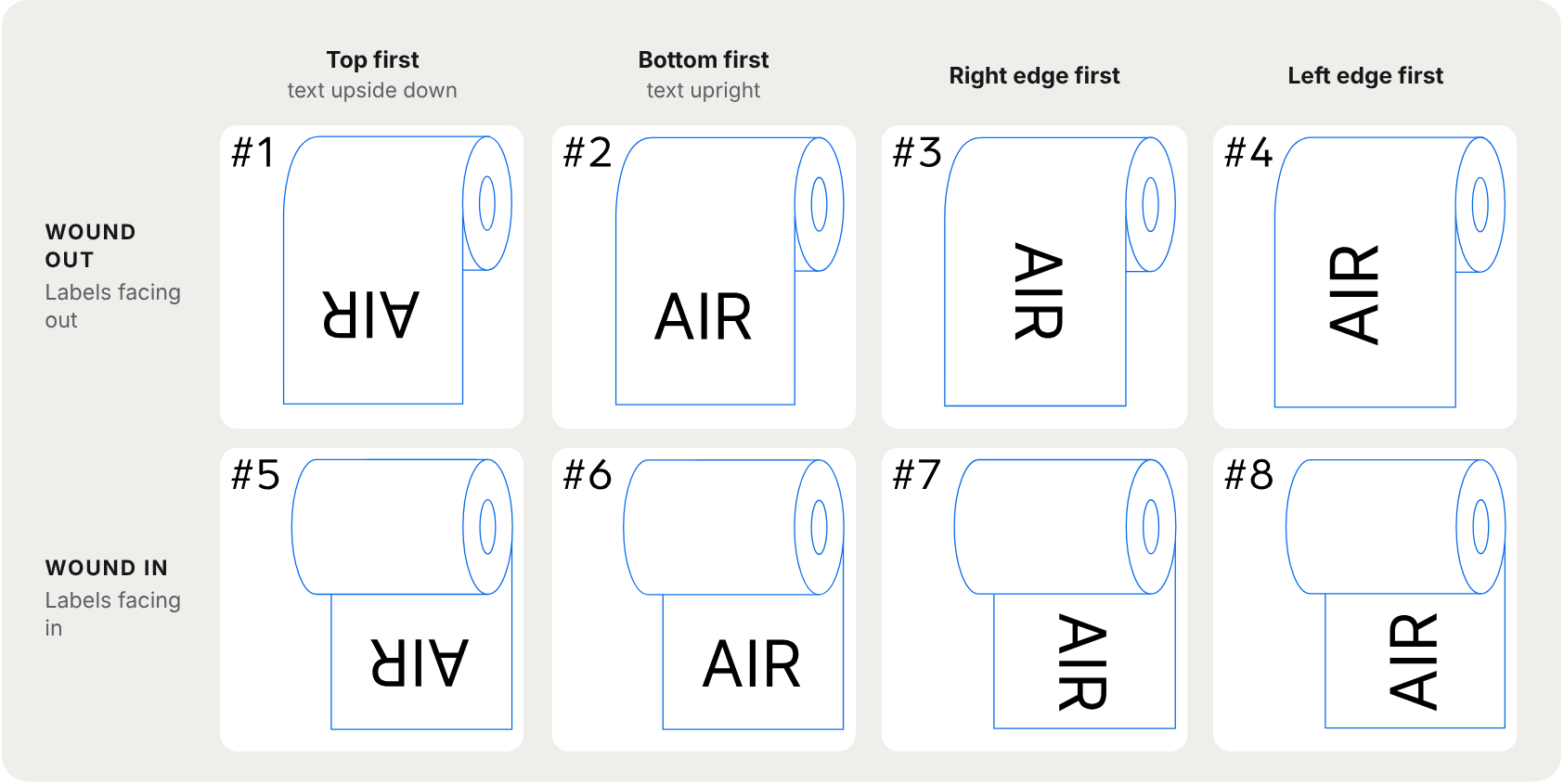
Air Labels and FINAT winding directions 1–8. The roll is seen from the front with the web hanging down, and the bottom edge is the one that comes off the roll first. The word AIR shows which way the text on the label faces.
2. A label does not show the direction
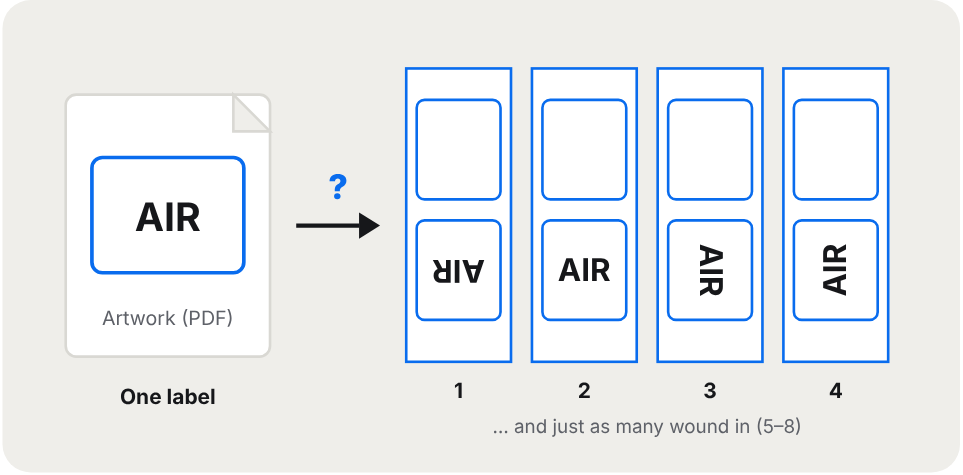
An artwork, a PDF or a picture of a single label only shows what the label looks like. It does not show how the label is positioned on the roll. The same artwork can be produced in all eight winding directions. That is why the winding direction must always be stated separately, either as an Air Labels/FINAT number or with a clear picture.
3. Width and height relate to the roll
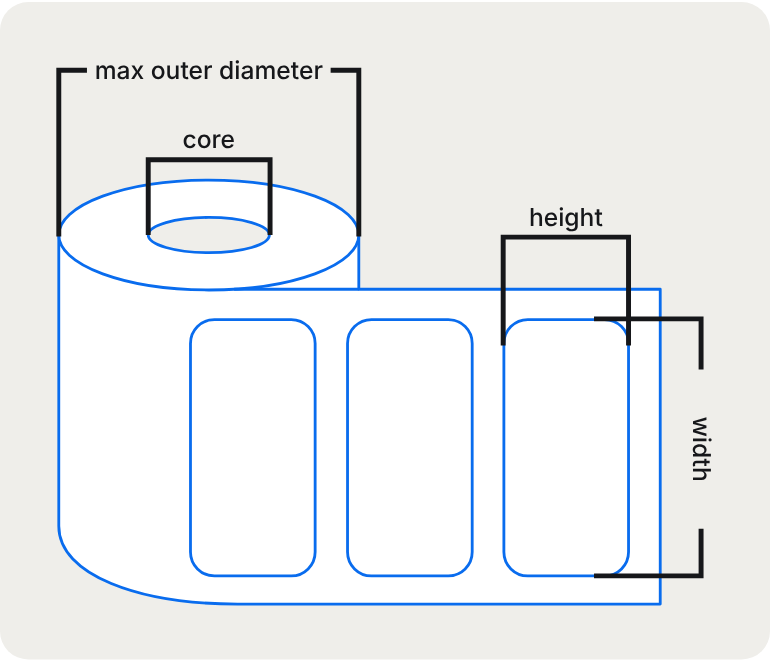
We state the label size as width × height based on how the label is positioned on the roll, not on how the text reads.
- Width is the dimension across the web, parallel to the core.
- Height is the dimension along the web, in the direction the labels are fed.
Other parts of the graphics industry often define width and height differently, for example by how the design reads. Take care not to mix them up.
Also state the inner diameter of the core and the maximum outer diameter of the roll or the number of labels per roll. This is needed for the roll to fit the application equipment.
4. Why the right winding direction matters
The winding direction depends on the label applicator, and there are many different kinds of applicators. The picture below shows one type and how the winding direction must match the applicator and the package.
In the applicator, the web is pulled from the roll past guide rollers to the peel plate, also called the beak. There the liner is folded sharply back and rewound, while the label releases and continues straight on to the product. The edge that comes off the roll first is the edge that is applied to the product first.
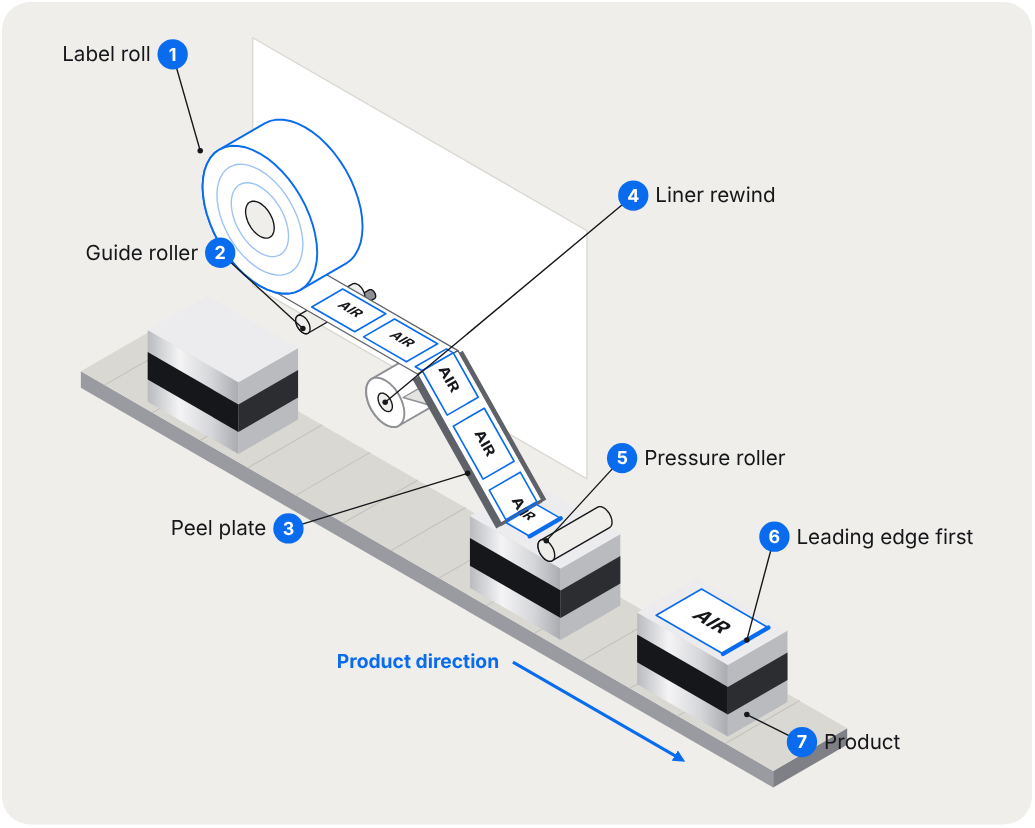
Schematic of an applicator that applies the label to the top of the product. Machines differ, so always check your machine’s manual.
Our recommendation
- State the winding direction as a FINAT number and confirm it against a picture before every production run. Other designations exist, and the same number can mean different directions at different suppliers.
- State the label size as width × height on the roll, together with the inner diameter of the core and the maximum outer diameter of the roll or the number of labels per roll.
- Not sure? Send us a photo of the roll in the machine, and we will help you find the right winding direction.
Frequently asked questions
Which winding direction should I choose?
It depends on your applicator, which way the products travel and how the label should be positioned on the package. Check the machine’s manual or a roll that works in the machine today.
Can you see the winding direction on my artwork?
No. An artwork only shows what the label looks like, not how it is positioned on the roll. Always state the winding direction separately.
What is the difference between wound out and wound in?
On a roll that is wound out (1–4), the labels are positioned on the outside. On a roll that is wound in (5–8), they are positioned on the inside, facing the core.

Leave a Reply
Want to join the discussion?Feel free to contribute!